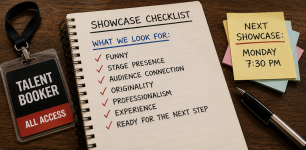
Business card – got one?

Hi Dave – I’ve decided to order business cards. I was wondering what information I should include. I was thinking phone number, email, and website. Is there anything else I need, or any reason not to include my address? – K.S.

Hey K.S. – Great decision. I’m always surprised how many comedians or performers still don’t have business cards. Maybe they think it’s a relic from the past—like mailing out DVDs instead of sending a link—but a business card is still an important promotional tool.

How is anyone supposed to know you’re out there and available for gigs if you don’t promote yourself? Unless you’re already a known comic, have a Comedy Central special, or a big-time agent pushing for you, you need to be prepared to handle the business side of your career.

Of course, the first step in any business is to be so good on stage that people want to see you again. That comes from writing, performing, then repeating the process countless times. But once you’re ready to move forward, promotion becomes a major part of your plan. It helps you take advantage of opportunities that can lead to showcases and paying gigs.

Promotion gets your foot in the door. Talent, hard work, and dedication are what get you hired. As I say in my book Comedy FAQs and Answers:

They may call it amateur night, but nobody’s looking to hire an amateur.

Memorize that—it’s true.

Now, your question wasn’t about showcases or all the ways to promote yourself, so let’s talk specifically about business cards.

I write a lot about networking and being part of your local comedy scene because you never know who you’ll meet—someone who could genuinely help your career. But are you prepared when that moment happens?

My latest

Back when I worked at The Improv, comedians would often ask how to get an audition or how to submit a video. Then, instead of handing over a business card, they’d say, “Let me give you my email,” and expect a manager to write it down—or they’d start searching for a bar napkin to scribble on.

Were they nuts? That’s not how you make a professional impression. And in my head, every time someone did that, I’d think: “Amateur…”

Even worse, some comics would just give their name and say, “I’ll send you my link,” or “Keep me in mind for showcases.”

Sorry, but I’m terrible with names. Honestly, there’s a woman interrupting me right now while I’m trying to write this. Her name escapes me… I should remember it—we’re married.

Get the idea?

People like talent bookers, event planners, and club managers deal with a lot of names. Make it easy for them to remember you and contact you. Business cards aren’t outdated or uncool. They’re a simple, effective professional tool.

So to finally answer your question:

Your business card should include:

  • Your name
  • What you do (comedian, speaker, etc.)
  • Your best contact info
    • Phone
    • Email
    • Website (with video and promo materials)

If you have a blog, newsletter, or podcast that supports your career and is actually interesting, you can include that link too.

Electronic business cards—QR codes, NFC cards, or files you can Airdrop—are also becoming popular. They’re great to have, but not everyone uses them yet. For someone just getting started, keep it simple and carry regular business cards.

A smart move is to design your card so it stands out. A photo or logo works, but if you (or a designer friend) can create something genuinely unique, memorable, or just plain cool, people are far more likely to keep it instead of losing it in a drawer.

On the flip side!

Try out a few designs on any inexpensive business card site—there are plenty—and don’t leave the house without at least a few cards on you. You can update or redesign them any time since they’re cheap and sometimes even free.

If you’re serious about building a career, you have to take promoting and networking seriously. When you meet someone new or stumble into an opportunity, a business card clearly communicates who you are and how to reach you. There’s nothing amateur about that.

One important warning:

Never put your home address on your business card or any promotional material. You don’t know where that card may end up, and the last thing you want is some wacko showing up at your door. Yes, this has happened—to both male and female performers.

A business card isn’t an outdated relic. It’s a simple, professional way to help people find you—and hire you.

Thanks for reading and as always – keep laughing!!

Winter 2026 Standup Comedy Workshop at The Cleveland Funny Bone:

Saturdays – January 10, 17 and 24 from noon to 4 pm.

Performance at The Funny Bone – Thursday, January 29 at 7:30 pm

Space limited – for details and to register visit COMEDYWORKSHOPS.

*

Click on the banner below to sign up for Dave’s free newsletter.

Looking for stage time

Hey Dave – I have performed terribly at three open-mics in Kentucky. Could you point me in the direction of a “lower end” establishment in Ohio? I’m looking for a place that does not require you to bring five friends. I don’t know five people. Thanks, J.

Come’on in – please!!

Hey J Thanks for thinking of me when it comes to “lower end” establishments. Maybe I should start calling this the Blue Collar Comedy Column – but let’s not go there. Instead of chasing a “higher end” reputation, let’s focus on what you really need: stage time.

First, about the whole bring-five-friends thing…

Open mics that aren’t at established comedy clubs tend to come and go quickly. Most are in bars, restaurants, or small venues. If the owner is making money on comedy night, it keeps going. If not, they swap the mic for a giant TV and start packing the place for football season.

That’s why you see so many “bringer” shows. It’s a simple business deal:

  • You bring paying customers.
  • They give you stage time to get experience and improve.

From their perspective, everybody wins.

Stage time!

Now, back when I started in this crazy business, we performed at open-mics in NYC that always had an audience – no bringer requirement. But times have changed. Today, getting stage time often means convincing friends to pay a cover and buy a couple drinks.

Chris Murphy, a comedy coach in NYC, shared some great tips on beating the bringer system in my book Comedy FAQs and Answers. Check your library or grab a copy online if you want the full story.

But let’s get back to your real question – where to find open-mics.

Here’s the deal: open-mic lists get outdated fast. I used to hand them out in my workshops, but by the next session, half the places had shut down or switched to karaoke. The smarter approach is:

  1. Research – Google comedy clubs in your area (Ohio in your case). Most legit clubs post open-mic info on their websites because it’s free promotion.
  2. Call – If there’s no info online, call the club. You’ll probably talk to a staffer, not the owner, so don’t worry about annoying the wrong person. Fun fact: many people answering phones at comedy clubs are aspiring comics themselves.

Even if the club doesn’t have an open mic, ask if they know of any. Comics tend to know where stage time is happening.

Once you find one open-mic, go there. Perform, hang out, and start talking to other comics. That’s networking – and it’s the real key to finding stage time. Comics share info, recommend each other, and build local comedy scenes together.

A few tips:

  • Be supportive. Watch other comics. Don’t just do your set and leave.
  • Share open-mic info when you find it.
  • Avoid being “that guy” who only takes and never gives back.

And yes, you’ll meet a few jerks along the way. Every business has them. Ignore the negativity and focus on improving and building connections.

The bottom line:
Once you are part of a local comedy scene, you’ll hear about open-mics before they’re even posted online. The more supportive you are, the more stage time opportunities will come your way.

Simple? From what I’ve seen, it usually is.

Thanks for reading and as always – keep laughing!

For details about September 2025 stand-up comedy workshop at The Cleveland Funny Bone check out this LINK!

Click on the banner below to sign up for Dave’s free newsletter.

For comments, questions about workshops and coaching please email – Dave@TheComedyBook.com

Finding stage time in Los Angeles

Hey Dave – I won a contest for a trip to Los Angeles to appear in a commercial. Unfortunately, since I’m not in SAG-AFTRA (Actors Guild), I’m being buried in the background as an extra. I’m pretty stoked about the trip though. I’m hoping to hit one of the popular comedy clubs in Hollywood and see if they’ll let me do a guest set. I’m wondering if you have any recommendations. I’ll be there next week for six days. – S.

LA – where dreams can come true!

Hey S. – First, congratulations! Winning a contest for a trip to L.A. is very cool, even if they’re burying you in the background since you’re not in the actor’s union. Consider it motivation to get that SAG-AFTRA card — though, to be honest, I had mine for years and still got buried in the background plenty of times.

Here’s the scoop — and, of course, your experience might be different:

Unless you’re already a well-known or semi-known headliner or feature with credits and contacts who can vouch for you, it’s extremely tough to get stage time at the popular Hollywood clubs when you’re just in town for a week. The local comics have invested years hanging out, showcasing, networking, taking workshops, bringing paying audiences (“bringer shows”), and doing whatever it takes to get seen.

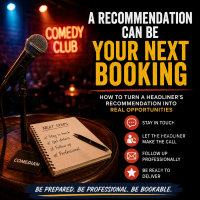
The bookers at clubs like The Improv, The Comedy Store, and The Laugh Factory need to spend their time on comedians they can actually book again soon. Giving a visiting comic a guest spot doesn’t help them much — unless you have a strong recommendation from a trusted regular (and I mean a real regular, not someone who’s just emceeing Monday open-mic nights).

I’ve been the talent booker at The Improv in L.A., so trust me — I know how this works.

So, to be blunt: it’s very unlikely you’ll score stage time at the big-name clubs during your short trip. But that doesn’t mean it can’t be a productive comedy visit.

Here’s what I recommend:


👉 Hit the open mics. L.A. has tons of them — Google “Los Angeles comedy open mics 2025” and you’ll find plenty. In fact, I just did and here’s a LINK. Always check that they’re still running — venues open and close fast. Call ahead or reach out to whoever books it. Some shows may ask you to bring guests; some may squeeze you in because you’re from out of town. You won’t know unless you ask.

👉 Check out the big clubs anyway. Even if you can’t get on stage, you should absolutely go watch a show or two. See how the pros work. Weeknight shows are best for watching up-and-coming comics; weekends are more touristy and packed with big names you can see on TV. You’ll learn a lot just by observing.

👉 Use this trip for inspiration. Wherever you find comedians, you’ll find comics hunting for stage time. It’s part of the grind. So, treat this trip as a chance to network, see what’s working in a major scene, and maybe make a few connections you can build on down the line.

Enjoy the commercial shoot, make the most of your free time, and soak up everything you can. Who knows? Maybe your next visit will be with a SAG-AFTRA card — and a real spot on the lineup.

Break a leg and have a blast in L.A.!

Thanks for reading and as always – keep laughing!

Click on the banner below to sign up for Dave’s free newsletter.

For comments, questions about workshops and coaching please email – Dave@TheComedyBook.com

3 Lessons I Learned From a 30-Year Comedy Veteran – Dave Schwensen

By Siddesh Pai – “I Help Comedians, Humor Keynote Speakers & Entrepreneurs Enhance Their Personal Brand Through Targeted Newsletters | Standup Comedian”

Readers: You can locate Siddesh Pai through the following link on LinkedIn. This is an interview we did earlier this year and I liked it enough to share it. Thanks Siddesh and keep laughing!!

https://www.linkedin.com/in/siddeshpai/

3 Lessons I Learned From a 30-Year Comedy Veteran – Dave Schwensen

Talking comedy

Dave has been working in comedy for three decades. But he wants to make one thing clear: he’s not a stand-up comedian. To me, it felt like a writer who doesn’t read. But that’s exactly what makes him different—he’s spent his career booking, coaching, and writing on the business of comedy. In our conversation, he dropped some serious wisdom on why treating comedy like a business is the key to making it a career.

1) Comedy Can’t Be Taught—But It Can Be Coached

“I don’t believe you can teach comedy. What I think is funny, you might not. My kids certainly don’t think I’m funny.” I can’t tell you the Three Stooges are funny if you don’t find slipping on a banana peel hilarious, there’s nothing he can do to change that. This is where coaching comes in. Every comedian has a different style, a different rhythm, and a different worldview. Dave helps comics refine that—polishing the delivery, cutting the fat from jokes, and shaping a strong act. Because at the end of the day, you can’t teach funny. But you can help someone be funnier.

2) No One Is Going to Hand You Stage Time – You Have to Create It

“You can’t teach timing, you can’t teach delivery, and you sure as hell can’t teach stage presence. You have to get up there and do it.” Most comedians think getting better means hitting open mics over and over. But Dave has a different take – go where the audience actually wants entertainment. Clubs are competitive. You’re performing for other comics, waiting for their turn. But business events, fundraisers, and community groups? They’re desperate for entertainment. Your first gigs might be free, but that’s how you build momentum. One day, you’re performing at a Rotary Club for free. The next, someone offers you $500 to do the same set. Stage time is currency. The more you get, the faster you grow.

3) They Call It Amateur Night, But No One Is Trying to Hire an Amateur

A lot of comedians treat stand-up like a passion project. But the ones who make a career out of it? They treat it like a business. – Networking Matters – Hanging out with comics at open mics isn’t enough. Get to know bookers, producers, and event organizers. These are the people who can actually get you paid work. – Market Yourself – Being funny isn’t enough if no one knows you exist. Build a brand, create content, and stay on people’s radar. Your name should pop up when someone’s looking for a comedian. – Be a Professional – Show up on time. Have a tight five. Be easy to work with. Give people your business card. Make yourself easy to book. The comedians who get booked aren’t just the funniest—they’re the ones who treat it like a business.

Thanks for reading – and keep laughing!

Click on the banner below to sign up for Dave’s free newsletter.

For comments, questions about workshops and coaching please email – Dave@TheComedyBook.com