Getting Past Gatekeepers

Hi Dave – No, I’m not a comic. However, I’m a WGA screenwriter with a total focus on comedy screenplays. Can you tell me how to contact comedians’ agents about casting specific roles without running into blockades? I mean the blockades typically set up by the gatekeepers of those agents. Best – HK

Leave a message

Hey HK – The bigger the comedians (think celebrity) they represent, the bigger the agency blockade will be. When you make a call without prior personal contact or a great reference, plan some extra time on the phone for holding, transfers and a final request to leave a voice message and “Someone will get back with you.”

Does anyone really know who that “someone” is? I doubt it because they rarely call back without prior contact or reference. And unless you left a voice message with a great pitch (offer) that includes the opportunity for a lot of potential $$$’s (yeah, I’m jaded) you’ll spend a long time looking at your phone waiting for that return call.

Cold calling agents is usually a losing game.

That’s not cynicism. That’s how the business works.

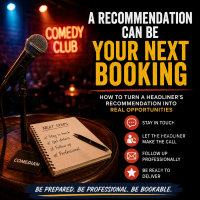
But there is a reliable path forward — and it’s the same one that comedians use to get booked, discovered, and cast:

Be seen. Be present. Be part of the scene.

Come on in!

When I worked as a talent coordinator at the Improv clubs in Los Angeles and New York, I watched industry relationships form every night. Comics performed. Agents, managers, producers, and writers watched. After the show, everyone gathered, talked, and connected. Opportunities didn’t come from cold outreach — they came from proximity and familiarity.

Producers frequently contacted the clubs looking for specific “types” for TV and film roles. That’s why you sometimes see several comedians with similar looks or personas performing short sets in a row. They’re not just performing — they’re showcasing.

And once someone is seen in the right context, access changes instantly. Conversations happen. Meetings follow. Gatekeepers step aside.

Here’s the practical takeaway for writers looking to cast comedians:

Don’t start with the agent. Start with the comedian.

Go to the clubs. Watch performers live. Identify who truly fits your project — not just who’s famous. Introduce yourself professionally after the show. Be respectful. Be clear. Be human.

If a comedian is interested, they can open the door to their agent with one phone call. That personal connection does more than any cold pitch ever will.

Is networking easy?

No. The entertainment industry runs on relationships, persistence, and yes — a bit of schmoozing. There’s a reason “Let’s do lunch” became standard vocabulary.

But if it didn’t work, nobody would keep doing it.

For established names, access is automatic. For everyone else, access is earned through visibility and connection.

Be part of the scene.

That’s how you get seen.

And once you’re seen, you have a chance to be heard.

Thanks for reading and as always – keep laughing!!

TAMPA, FLORIDA

Standup Comedy Workshop at The Tampa Funny Bone:

Saturdays – March 14, 21 and 28 from 12:30 to 4:30 pm.

Performance at The Funny Bone – Wednesday, April 1 at 7 pm

Space limited – for details and to register visit COMEDYWORKSHOPS.

*

Click on the banner below to sign up for Dave’s free newsletter.

Clean or Dirty? You’d better know your audience

Hi Dave – I have one question. As a new comedian does my material have to be clean? – J.N.

Have a decision to make!

Hey J.N. — you’re not alone. This question comes up all the time, and new comedians ask it for a good reason: it matters.

Here’s the short answer upfront (because I’m rarely accused of giving one):

There is no right or wrong answer.

Comedy is both a creative art and a business, but before either of those things matter, there’s one primary goal:

Be funny.

How you get there is completely up to you.

A very famous comedian once told me (and I included this in my book How To Be A Working Comic):

“If you swear in real life, you’re going to swear on stage.”

That makes sense. If those words are already part of who you are, they’ll naturally show up in your act. But if they aren’t—don’t add them because you think they’ll make you funny. Audiences can smell that a mile away, and “trying to be edgy” is never as funny as being honest.

There’s a market for everything. Whether you choose to work clean or adult is a personal decision.

But since you asked – and once again, I’ve never been known for short answers – let’s look at this from a different angle.

We’ll call it…

Your Audience

But will they laugh?

You specifically said new comedian, so let’s start there.

When you’re beginning, your job is simple:

Get stage time. Learn how to write. Learn how to perform. Learn how audiences respond.

Along the way, you’ll encounter different rooms, different crowds, and very different expectations.

  • Some comedians love late-night, beer-soaked club crowds.
    Others prefer corporate events, colleges, or private functions.
  • Right now, it’s probably too early to know which lane you’ll ultimately choose—and that’s okay. But eventually, this becomes both a creative and business decision, because different markets hire different kinds of comics.

So here’s the real question behind your question:

Who do you want your audience to be?

Every entertainer has to answer that—not just comedians. As a creative artist, who do you want to make laugh? And as a businessperson (yes, that’s you), how will you build an audience that supports your work?

When you’re starting out, that audience could be anyone: open mics, bar shows, fundraisers, showcases. What matters most is experience. You don’t become a working comic by rehearsing in your living room or performing for the family dog.

You get better by getting on stage.

  • If they laugh, it works.
  • If they don’t, it doesn’t.

Audiences are honest that way—which is why stage time is priceless.

https://youtu.be/mu1F3ck5ZgE?si=AuPP001eW_GOKONc

Know the Room

Would your audience want clean material or adult material?

That’s not a moral question. It’s a practical one.

I’ve coached Born Again Christian comics and the most X-rated acts you can imagine. I don’t care which direction someone chooses—as long as they’re clear about it and performing for the right audience.

  • But make no mistake: there are rules in this business.
  • And those rules are made by the people who hire comedians.
  • You can’t do X-rated material on network television. Cable and satellite radio allow more freedom—but even then, context matters. The Disney Channel and The Howard Stern Show aren’t fighting over the same talent pool.

So ask yourself:

  • Where do you want to perform?
  • Who do you want laughing?
  • Which markets excite you?

You can work dirty—just don’t do it in front of grandparents who brought their grandkids for a fun night out. And don’t expect your clean, church-friendly material to crush in a late-night dive bar full of people upset that the bartender turned off cage-match wrestling for a comedy show.

Get the picture?

Experience Changes Everything

Many experienced comics can work both clean and adult. Why? Because their jokes are funny on their own—not because of an F-bomb. They can adjust based on the room.

A perfect example: cruise ship comics.

They perform family-friendly shows before and after dinner, then switch gears later that night for adult-only crowds. Same comedian. Same brain. Two very different sets—sometimes just hours apart.

That kind of flexibility comes from experience.

And one more thing to keep in mind…

The people who hire comics for corporate events, banquets, and private functions pay far more than the beer-soaked guy booking a bar show. That’s why many working comics love corporate gigs.

On the other hand, an uncensored Netflix special or becoming a regular guest on a show like Stern can launch a career just as fast.

Different paths. Same requirement.

So… Clean or Dirty?

As a new comedian, here’s my advice:

Focus on writing funny material—material that works with or without a few choice words. Develop jokes that stand on their own. Learn how to adjust your delivery depending on the room.

Then ask yourself:

  • Would I rather perform at a business luncheon—or a late-night dive bar?

Neither answer is wrong. But knowing your audience will help you find the right one.

And that’s where real comedy careers begin.

Thanks for reading and as always – keep laughing!

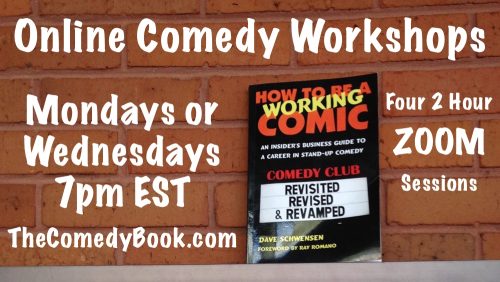
Next online comedy workshop groups start

Wednesday, February 11 and Monday, February 16, 2026

Space is limited – for details, reviews and registration visit OnlineWorkshops

*

Click on the banner below to sign up for Dave’s free newsletter.

Laughs and Bookings – the best revenge

Hey Dave – I had a great set last night, but one of the comedians who went on after me tore into me. It got really personal, and it honestly hurt. The people running the show asked if I wanted to go back on and get revenge, but I declined. Did I handle it the right way? – N.R.

Best revenge!

Hey N.R. – It sounds like the opening shot in a potential comedy war. Whether you want to crawl into the comedy trenches (a common comedy term — not mine) with this loudmouth depends on two things:

• Your onstage personality — your comic voice
• How you want to be seen onstage and offstage in this business

Maybe I’m naive, but after a few decades working with comedians, I’ve found this business to be far more supportive than people think. Sure, there are jerks — real pains in the butt — but I don’t know any career path that’s immune from that.

When this kind of behavior happens, it’s usually fueled by jealousy, ego, or a power trip. And here’s the irony: in my experience, the more power someone actually has in the business, the more supportive they tend to be of newer talent. That goes for comedians, bookers, and behind-the-scenes decision-makers.

Disbelief?

(I can practically feel the disbelief from some readers right now. This may turn into a future FAQ — I’ll let that thought marinate.)

For now, here’s the real issue:

Who are you onstage, and how do you want to be perceived by the people you work with — other comics and the people who hire them?

Comedians who are genuine friends tear into each other onstage all the time. That can be hilarious. At the NYC Improv, we could run a microphone into the men’s room and hold it over a flushing toilet when a friend’s joke bombed. The comic onstage ripped into us for the rest of the set, and everyone loved it.

  • That’s playful.
  • That’s earned.
  • That’s mutual.

What you experienced sounds different.

SPECIAL EVENT – ORLANDO, FLORIDA!

Standup Comedy Workshop at The Orlando Funny Bone:

Saturdays – February 7, 14 and 28 from noon to 4 pm.

Performance at The Funny Bone – Wednesday, March 4 at 7 pm

Space limited – for details and to register visit COMEDYWORKSHOPS.

*

When it’s mean-spirited, there’s no upside. An unprovoked attack is almost always about making him look better at your expense — jealousy, ego, or both.

There are two ways to handle this, and the right choice depends on who you are.

If you’re the kind of comedian who can verbally dismantle someone — truly dismantle them — then by all means, go for it. A skilled insult comic doesn’t absorb cheap shots; they return them with interest. Think Nikki Glaser, Marc Maron, Wanda Sykes, Dave Attell, Jeff Ross. An insult comic worth their weight can turn a heckler — or a fellow comic — into roadkill.

If that’s you, next time: aim for the throat.

But if that’s not your voice — onstage or in life — then you absolutely did the right thing by walking away.

Let this guy burn his own reputation. Comics don’t want to work with someone known for cheap shots. And bookers? They want the least amount of drama possible. Speaking from experience as a booker, I’ve passed on very funny non-headliners simply because they were a pain to deal with.

If someone else is just as funny — and easier to work with — that’s who gets the gig. Every time.

In a perfect world, your only focus should be becoming a better comedian. If someone chasing the same goal doesn’t like you, you’re probably doing something right.

Want revenge?
Get more laughs.
That leads to more bookings.

Use this moment as fuel. If your work ethic and focus pay off, maybe someday this loudmouth will be parking cars outside a comedy club, ripping into his coworkers — while you’re inside headlining.

Make it happen.

Thanks for reading and as always – keep laughing!!

SPECIAL EVENT – ORLANDO, FLORIDA!

Standup Comedy Workshop at The Orlando Funny Bone:

Saturdays – February 7, 14 and 28 from noon to 4 pm.

Performance at The Funny Bone – Wednesday, March 4 at 7 pm

Space limited – for details and to register visit COMEDYWORKSHOPS.

*

Click on the banner below to sign up for Dave’s free newsletter.
Comedy Blues and Creative Highs

Hey Dave – I have a confession to make and was wondering if this is normal or not and if so, how to deal with it? Is there such a thing as having the blues in comedy? I guess you could call it the Comedy Blues. I mean, I’ve been told “no” before and had terrible sets in the past. But I strongly feel it has made me the keen comedian I am today. But still, if I may… help! – A.

An instrument for creativity

Hey A. – Congratulations. You’re a creative artist.

And what you’re feeling? It comes with the territory.

A career in the arts—comedy, speaking, acting, music, writing—often means riding an emotional roller coaster. Big highs. Big lows. That’s one reason so many people wish they could do it, but don’t. Standing on stage, getting laughs, meeting fans, and getting paid is a great gig. From the audience, it looks glamorous. What they don’t see is the rejection, the waiting, the self-doubt, and the work.

The people who truly pursue it usually don’t feel like they have a choice. They have to do it.

This may sound more motivational than instructional today but stay with me.

Let’s talk music for a second. Some great songs are about incredible highs. Others are about lows—the blues. Blues songs exist because nothing worth having comes easy. They’re about loss, frustration, and struggle.

Now translate that to comedy.

Creative words from a creative artist

If you’re serious about being a comedian (or humorous speaker), you want things to happen now. But progress is slow. Opportunities are unpredictable. Yes, there are huge highs—your first paid gig, passing an audition, winning a contest. But there are also long stretches where nothing clicks, nothing moves, and doors stay closed.

Here’s the truth: every working comic will tell you that you’ll hear “no” far more than “yes,” especially early on.

That’s not a flaw in the system. That is the system.

If you want to stay in this business long enough to build a career, you need to develop thick skin. There’s no shortcut around it.

Think of it like sports. The best relief pitchers in baseball blow saves. What separates them from the ones who spiral or disappear is their ability to shake it off and throw the next pitch with confidence. That mindset has to be learned—or developed quickly—if you want to survive in a competitive field.

Comedy is exactly that: a creative art inside a competitive business.

You put your work—and yourself—out there to be judged by bookers, producers, and audiences. Some will love it. Some won’t. The goal isn’t avoiding highs and lows. The goal is not letting either one define you.

I remember working in New York and hearing brand-new comics say they planned to have a sitcom within a year. I heard it more than once. Meanwhile, the comics hanging around the NY Improv—Ray Romano, Larry David, Dave Attell (to mention only three)—had been grinding for years. They didn’t get everything they auditioned for. They just didn’t quit when someone said “no.”

Unrealistic expectations create massive lows.

Understanding the process creates resilience.

That process has a name: paying your dues. Some people drop out because they can’t take the lows. Others continue because they’re wired to create—whether success comes quickly or not. Continuing doesn’t guarantee success. Talent, business skills, relationships, and luck all matter. But quitting guarantees nothing.

So, what do you do with the Comedy Blues?

Sometimes you step back and regroup. Sometimes you put your head down and keep going. For many creative artists, there isn’t really a choice.

One final thought: consider using those feelings in your writing.

You don’t need to talk about the Comedy Blues—but bringing real emotion into your material adds honesty and depth. Audiences can spot fake instantly. They can also sense when someone is telling the truth, even through jokes.

Most strong comics and speakers draw from experience. They’ve ridden the roller coaster. They’ve paid their dues.

Remember—this is a creative art.
And being a creative artist has never been easy.

But for those who feel called to it?
It’s the only ride worth taking.

Thanks for reading and as always – keep laughing!!

Winter 2026 Standup Comedy Workshop at The Cleveland Funny Bone:

Saturdays – January 10, 17 and 24 from noon to 4 pm.

Performance at The Funny Bone – Wednesday, January 28 at 7:30 pm

Space limited – for details and to register visit COMEDYWORKSHOPS.

*

Click on the banner below to sign up for Dave’s free newsletter.
Business card – got one?

Hi Dave – I’ve decided to order business cards. I was wondering what information I should include. I was thinking phone number, email, and website. Is there anything else I need, or any reason not to include my address? – K.S.

Could use more info…

Hey K.S. – Great decision. I’m always surprised how many comedians or performers still don’t have business cards. Maybe they think it’s a relic from the past—like mailing out DVDs instead of sending a link—but a business card is still an important promotional tool.

How is anyone supposed to know you’re out there and available for gigs if you don’t promote yourself? Unless you’re already a known comic, have a Comedy Central special, or a big-time agent pushing for you, you need to be prepared to handle the business side of your career.

Of course, the first step in any business is to be so good on stage that people want to see you again. That comes from writing, performing, then repeating the process countless times. But once you’re ready to move forward, promotion becomes a major part of your plan. It helps you take advantage of opportunities that can lead to showcases and paying gigs.

Promotion gets your foot in the door. Talent, hard work, and dedication are what get you hired. As I say in my book Comedy FAQs and Answers:

They may call it amateur night, but nobody’s looking to hire an amateur.

Memorize that—it’s true.

Now, your question wasn’t about showcases or all the ways to promote yourself, so let’s talk specifically about business cards.

I write a lot about networking and being part of your local comedy scene because you never know who you’ll meet—someone who could genuinely help your career. But are you prepared when that moment happens?

My latest

Back when I worked at The Improv, comedians would often ask how to get an audition or how to submit a video. Then, instead of handing over a business card, they’d say, “Let me give you my email,” and expect a manager to write it down—or they’d start searching for a bar napkin to scribble on.

Were they nuts? That’s not how you make a professional impression. And in my head, every time someone did that, I’d think: “Amateur…”

Even worse, some comics would just give their name and say, “I’ll send you my link,” or “Keep me in mind for showcases.”

Sorry, but I’m terrible with names. Honestly, there’s a woman interrupting me right now while I’m trying to write this. Her name escapes me… I should remember it—we’re married.

Get the idea?

People like talent bookers, event planners, and club managers deal with a lot of names. Make it easy for them to remember you and contact you. Business cards aren’t outdated or uncool. They’re a simple, effective professional tool.

So to finally answer your question:

Your business card should include:

  • Your name
  • What you do (comedian, speaker, etc.)
  • Your best contact info
    • Phone
    • Email
    • Website (with video and promo materials)

If you have a blog, newsletter, or podcast that supports your career and is actually interesting, you can include that link too.

Electronic business cards—QR codes, NFC cards, or files you can Airdrop—are also becoming popular. They’re great to have, but not everyone uses them yet. For someone just getting started, keep it simple and carry regular business cards.

A smart move is to design your card so it stands out. A photo or logo works, but if you (or a designer friend) can create something genuinely unique, memorable, or just plain cool, people are far more likely to keep it instead of losing it in a drawer.

On the flip side!

Try out a few designs on any inexpensive business card site—there are plenty—and don’t leave the house without at least a few cards on you. You can update or redesign them any time since they’re cheap and sometimes even free.

If you’re serious about building a career, you have to take promoting and networking seriously. When you meet someone new or stumble into an opportunity, a business card clearly communicates who you are and how to reach you. There’s nothing amateur about that.

One important warning:

Never put your home address on your business card or any promotional material. You don’t know where that card may end up, and the last thing you want is some wacko showing up at your door. Yes, this has happened—to both male and female performers.

A business card isn’t an outdated relic. It’s a simple, professional way to help people find you—and hire you.

Thanks for reading and as always – keep laughing!!

Winter 2026 Standup Comedy Workshop at The Cleveland Funny Bone:

Saturdays – January 10, 17 and 24 from noon to 4 pm.

Performance at The Funny Bone – Thursday, January 29 at 7:30 pm

Space limited – for details and to register visit COMEDYWORKSHOPS.

*

Click on the banner below to sign up for Dave’s free newsletter.
Being Influenced vs. Copying

Hey Dave – I’ve been working on material and continue to search for my comedy voice. Although I want to do some improvising, I want a good amount of material to work off of. Someone said I have a somewhat eccentric and iconoclastic persona and should take advantage of that. Therefore, I’ve thought about using Prof. Irwin Corey and Steven Wright as influences and been writing material similar to theirs, especially since I like it. However, I’m afraid I’m not using them as an influence but just copying them. Is there a thin line between the 2 or just between fishing and standing there doing nothing? – JK

Read and remember!

Hey JK – I was fortunate to work with the late, great Prof. Irwin Corey and with Steven Wright during my years at The NYC Improv. And as I always tell the younger comics: if you don’t know who those guys are, look them up. You’ll learn a lot about the history of stand-up and how much past performers have shaped the headliners we see today.

Both Prof. Corey and Steven Wright are incredibly smart and incredibly funny. I also know that if I ever tried to write like either one, I’d be lost – completely confused. My brain actually hurts just thinking about it. But I do have some thoughts on your question, so instead of standing here doing nothing, let’s go fishing for an answer…

Yes – there is a line between being influenced and copying. Ideally, it should be a wide one.

As Prof. Corey would say, “Let me explain…”

Prof. Irwin Corey

I often compare comedy to music. I’ve done this in my workshops, books, and more than a few FAQs. You can’t reinvent the wheel. Someone had to hum the first tune, and someone had to make the first joke. Musicians and comedians have been building on those firsts ever since.

One of my all-time favorite bands is The Rolling Stones. They’ve influenced countless musicians for more than sixty years – yet there’s still only one Rolling Stones. But even they started by copying their heroes: Muddy Waters, Howlin’ Wolf, Robert Johnson, Chuck Berry, Bo Diddley… the list goes on.

Did they copy? Absolutely.

They played a lot of covers early on. But that’s not what made them legends. Mick Jagger found his own voice. Keith Richards found his. Together they wrote new songs inspired by what they loved – but filtered through who they were.

That’s exactly how comedians develop. They start by emulating what they like.

Keith Richards isn’t going to play Bach when he grew up loving Chuck Berry. And based on how you described your humor, I doubt you’re going onstage with props like Carrot Top or with the kind of sharp-edged commentary Dave Chappelle is known for. You admire Corey and Wright, so of course they’ll influence you – just like Chuck Berry influenced the Stones.

But here’s the big difference between comedy and music:

Steven Wright

The Rolling Stones can play “Johnny B. Goode” in concert. A comedian can’t go onstage and say, “Here’s one from Steven Wright,” and then perform his jokes.

That’s not influence – that’s theft. And yes, there are comedians who do it. And most of us know exactly who they are. The respect level for joke thieves is somewhere below sea level.

Being influenced is not the same as stealing.

Creative artists build on what came before them. A Rolling Stones song might have a Chuck Berry riff or a Bo Diddley beat hiding in the background, but it’s still a Stones song. Likewise, comedians can’t help but be influenced by the style of humor they enjoy.

Carrot Top didn’t invent prop comedy. Every kid who ever held paper plates to their head and pretended to be Mickey Mouse dabbled in prop comedy. He took what he liked and built on it.

That’s what you need to do.

You understand your comedic style. It’s reminiscent of Corey and Wright, but you’re not Corey and you’re not Wright – and that’s the point. You didn’t grow up in their neighborhoods, their families, their jobs, or their lives. You have your own stories, experiences, personality, and point of view.

That’s where your material has to come from.

Don’t ask, “What would Steven Wright say?” Ask, “What do I think about this?” Respect your influences, borrow the sensibility you appreciate – but say things in your own words with your own brain.

When I worked in Los Angeles, I worked with Jim Carrey and Michael Richards (Kramer from Seinfeld). Both were massive Jerry Lewis fans. But neither went onstage yelling, “HEY LAAYYYDEEE!” That would’ve been stealing. But they did incorporate Lewis-style physicality, wild expressions, and pratfalls – filtered through their own personalities and experiences. And Jerry Lewis, of course, had been influenced by Chaplin and Harpo Marx.

That’s how influence works.

Use your natural mannerisms, your personality, and your experiences to shape your material. Don’t hold paper plates up to your head and hope the audience laughs – dig deeper. Think about why something is funny to you and how you see it. Then present that.

Everyone is influenced by someone. None of us are inventing the wheel – we’re just putting better tires on it. The key is understanding what makes you unique and exploring material that fits your comedic point of view.

Keep writing. Keep performing. Your comedy voice will emerge. And one day, when someone asks who influenced you, you’ll have your answer – just like every successful comedian does. The turning point is when you stop copying and start building on what inspired you in the first place.

Thanks for reading and as always – keep laughing!!

Click on the banner below to sign up for Dave’s free newsletter.

The Comedy Police Force

Hey Dave – I was at an open-mic last week. A comic went on stage and “called out” another comic who had gone before him for stealing jokes. He did this from the stage. Afterwards, he couldn’t prove it – and no one else remembered hearing those jokes anywhere else. We think he was wrong and handled it wrong. Any thoughts? – D

Comedy police out for joke-stealers!

Hey D – I always have thoughts. And when they’re about comics stealing material, they’re never good ones.

What a jerk.

Wait… let me rethink that. We might have two jerks here. Allow me to think out loud – or at least in loud writing.

JERK #1

This honor goes to the comic who “called out” the other one from the stage.

First of all, he admitted afterward that he had no proof. Maybe he thought he was being edgy—sometimes that works—but not when it’s at the expense of another comic who’s just trying to improve at an open-mic. That’s what these nights are for: getting better.

(And of course, this assumes the first comic didn’t actually steal material.)

The accuser should’ve talked to him privately, not trashed him in front of an audience. Unless a comic is known for stealing, the professional move is to speak offstage, one-on-one.

Bill Engvall talked about this in my book Comedy FAQs and Answers. He called it the comedy police.

Mention it!

When you think someone’s stealing, mention it—but privately. Comics should police each other, keep each other honest. If the warned comic keeps doing the same bit after being told, then there might be consequences.

But sometimes it’s not theft – it’s coincidence.

I once knew two comics, one in New York and one in Los Angeles, who independently wrote the same joke. They didn’t know each other and had never worked the same clubs. But the LA comic did the joke on the television show, A&E’s An Evening at the Improv.

(I know, because I was the talent coordinator standing off – camera when it happened.)

After the taping, I called the NY comic – both are still friends of mine – and told him what happened. He immediately said, “Well, I can’t do that joke anymore.” He wasn’t mad, because he knew they’d both written it honestly. But now that it had aired nationally, the other guy “owned” it.

That’s just how the business works.

So yes, a comic can accidentally do something too similar to someone else’s bit. The right way to handle that is quietly and respectfully – not grandstanding from the stage.

If you’ve got proof, talk privately. If he keeps doing it, then you can call him out.

JERK #2

Now let’s talk about the other jerk – the one who really does steal.

Back in New York, when I was starting out, there was an open-mic comic who ran a popular show. He was a nice guy, gave people stage time, and claimed to be a headliner in Florida.

That didn’t quite add up.

Turned out, he was going to Florida and doing the best material he’d stolen from comics performing at his open-mic.

Say what?!

The reaction from the NY comedy scene was swift and brutal. Nobody played his open-mic anymore, and no one else would give him stage time. Word got around, and eventually, he left for Florida to “pursue his career.” I later heard he was parking cars. Can’t confirm that – but it fits.

A few years later, when I was talent coordinator for An Evening at the Improv, he called my office trying to play the “old friend” card for an audition. Short story – he didn’t get one.

Chalk another up for the comedy police.

The Bottom Line

So, to answer your question, yeah – the comic who called the other one out from the stage was wrong. If he thought there was a problem, he should’ve handled it privately. Maybe the other comic didn’t even realize it. But if there’s proof, he needs to stop doing the joke.

And if he really is stealing? The comedy police will take care of it.

Comedy is a small world. Word gets around fast.

If it’s obvious someone’s stealing and they keep doing it, they’ll be blacklisted before long. Odds are better they’ll be parking cars at a comedy club before they ever “own” anyone else’s material on television.

Thanks for reading and as always – keep laughing!

Next online comedy workshop groups start

Monday, October 27 and Wednesday, October 29, 2025

Space is limited – for details, reviews and registration visit OnlineWorkshops

*

Click on the banner below to sign up for Dave’s free newsletter.
Bomb Alert! An Onstage Survival Guide

Hi Dave – What should you do if no one is laughing or if you realize that you are starting to bomb? – A.B.

Hey A.B. – Duck and cover.

On stage excitement!

Okay, that’s probably not the answer you were looking for. So, here’s another one that I’ve seen actually work.

But first, a quick definition.

Some readers may not know exactly what bombing means. It’s when you’re on stage doing your best to entertain — whether you’re a comedian or a humorous speaker — and absolutely nothing is working. The audience isn’t laughing, you start to panic, you begin to sweat, and you’re convinced everyone in the room hates you.

That’s Bombing 101.

And if you ever get used to it, you’re in the wrong business. I don’t know a single comedian who hasn’t gone through it. And if one claims they haven’t, they’re just playing a joke on you.

The dedicated comics never let bombing stop them. But the smart ones use it as a learning experience – usually discovering what not to do next time.

In my book Comedy FAQs and Answers, I talked with comedian George Wallace about this. Early in his career, he performed under the stage name The Reverend George Wallace and used a phone book as his “Bible.” The bit killed in New York City – until his first road gig in upstate New York.

The audience hated it.

He was booked for an hour, and he did an hour, but it was a mega-ton bomb. Driving home, he felt so bad he actually thought about steering off a bridge.

But that night became a turning point. He swore he’d never let that happen again. He rethought everything about his act and his stage persona. The “Reverend” was gone — so was the phone book. He decided that if he was having fun on stage, the audience would too.

And if the audience is having fun, you’re not bombing.

If you’ve ever seen George Wallace perform, you know what I mean. The man is practically immune to bombing.

How to Turn It Around – In Real Time

So, what should you do when it’s happening to you?

Here’s a proven technique I’ve seen big-name comics use to turn a tough crowd around: talk TO and WITH the audience.

Seriously — I’ve seen it more times than I can count. When your material isn’t connecting, stop pushing it. Put the script aside for a moment and start engaging the people in front of you.

A Story from The Improv

When I was scheduling comics for the Hollywood Improv, one of our most reliable — and funniest – acts had a rare off night. His material was top-notch, but for whatever reason, the audience just wasn’t responding.

To my surprise, he did something I’d never seen him do. He took the microphone out of the stand, walked to the front of the stage, and started talking directly to the audience.

He kept it casual: “Where are you from?” “What do you do for a living?”

Simple questions that led to funny exchanges and real conversation.

Once the audience was relaxed and engaged, he stepped back, put the mic in the stand, and went back to his material. This time, they loved him. They got the jokes, laughed hard, and he walked off to huge applause.

Why It Worked

When I asked him about it later, he reminded me that most comedians start out as MCs – hosting shows, introducing acts, and learning how to warm up a crowd. The MC’s job is to get the audience laughing and involved.

And the best way to do that? Talk TO and WITH them.

It’s a skill every comic should learn early – one that can save you in a tough room. I saw comedians use this technique not only in Los Angeles, but also when I managed The Improv clubs in New York and Cleveland. It’s not luck or instinct – it’s a learned survival tool.

The Bottom Line

When you feel the energy dropping or your set slipping away, stop talking at the audience and start talking with them.

It’s the quickest way to rebuild the connection – and remind everyone, including yourself, that this is supposed to be fun.

And if that doesn’t work? Well, there’s always the old “duck and cover” method.

Thanks for reading and as always – keep laughing!

Next online comedy workshop groups start

Monday, October 27 and Wednesday, October 29, 2025

Space is limited – for details, reviews and registration visit OnlineWorkshops

*

Click on the banner below to sign up for Dave’s free newsletter.

Looking for stage time

Hey Dave – I have performed terribly at three open-mics in Kentucky. Could you point me in the direction of a “lower end” establishment in Ohio? I’m looking for a place that does not require you to bring five friends. I don’t know five people. Thanks, J.

Come’on in – please!!

Hey J Thanks for thinking of me when it comes to “lower end” establishments. Maybe I should start calling this the Blue Collar Comedy Column – but let’s not go there. Instead of chasing a “higher end” reputation, let’s focus on what you really need: stage time.

First, about the whole bring-five-friends thing…

Open mics that aren’t at established comedy clubs tend to come and go quickly. Most are in bars, restaurants, or small venues. If the owner is making money on comedy night, it keeps going. If not, they swap the mic for a giant TV and start packing the place for football season.

That’s why you see so many “bringer” shows. It’s a simple business deal:

  • You bring paying customers.
  • They give you stage time to get experience and improve.

From their perspective, everybody wins.

Stage time!

Now, back when I started in this crazy business, we performed at open-mics in NYC that always had an audience – no bringer requirement. But times have changed. Today, getting stage time often means convincing friends to pay a cover and buy a couple drinks.

Chris Murphy, a comedy coach in NYC, shared some great tips on beating the bringer system in my book Comedy FAQs and Answers. Check your library or grab a copy online if you want the full story.

But let’s get back to your real question – where to find open-mics.

Here’s the deal: open-mic lists get outdated fast. I used to hand them out in my workshops, but by the next session, half the places had shut down or switched to karaoke. The smarter approach is:

  1. Research – Google comedy clubs in your area (Ohio in your case). Most legit clubs post open-mic info on their websites because it’s free promotion.
  2. Call – If there’s no info online, call the club. You’ll probably talk to a staffer, not the owner, so don’t worry about annoying the wrong person. Fun fact: many people answering phones at comedy clubs are aspiring comics themselves.

Even if the club doesn’t have an open mic, ask if they know of any. Comics tend to know where stage time is happening.

Once you find one open-mic, go there. Perform, hang out, and start talking to other comics. That’s networking – and it’s the real key to finding stage time. Comics share info, recommend each other, and build local comedy scenes together.

A few tips:

  • Be supportive. Watch other comics. Don’t just do your set and leave.
  • Share open-mic info when you find it.
  • Avoid being “that guy” who only takes and never gives back.

And yes, you’ll meet a few jerks along the way. Every business has them. Ignore the negativity and focus on improving and building connections.

The bottom line:
Once you are part of a local comedy scene, you’ll hear about open-mics before they’re even posted online. The more supportive you are, the more stage time opportunities will come your way.

Simple? From what I’ve seen, it usually is.

Thanks for reading and as always – keep laughing!

For details about September 2025 stand-up comedy workshop at The Cleveland Funny Bone check out this LINK!

Click on the banner below to sign up for Dave’s free newsletter.
For comments, questions about workshops and coaching please email – Dave@TheComedyBook.com

Corporate Comedy: Think big but start small

Hi Dave – I just joined your email list. I do humor and did my first two stand-up open mics… rough crowd. Someone threw a cup of ice at one of the other comedians. My goal: to get some gigs entertaining at travel conferences. I have a bunch of funny travel stories. Any idea who I approach? A booking agent? I’m new to this, so any thoughts are appreciated. – R.R.

Traveling for work!

Hey R.R. – Only one cup of ice and you call that a rough crowd? Welcome to open mics. No wonder you’re aiming for conferences and corporate gigs. At those, the worst you’ll get is an icy stare if you’re not funny.

Here’s the thing: two open mics is a start, but you’ll need a lot more stage time to develop timing, delivery, and the ability to dodge both ice cubes and awkward silence. That only comes from performing – over and over.

Since you want to specialize in funny travel stories, focus now on two things:

  1. Writing – Create material that you find interesting. If it doesn’t grab you, it won’t grab the audience.
  2. Short sets – Start with five minutes. Think of it like writing a book: one chapter at a time. Use “color” – vivid descriptions – to take the audience on the trip with you. And make it funny.

Once you’ve got that five minutes, try it live:

  • Don’t avoid traditional open-mics, but search out stage opportunities with “real” audiences (and not just other comedians waiting their turns to go on stage).
  • Offer to speak for free at local business groups, networking breakfasts, luncheons, or special interest clubs. These are the “open mics” of the corporate world.

Work for free?

Why free?

Because you’re practicing, and they’re doing you the favor by giving you an audience. Keep it squeaky clean – G-rated – because in the corporate market, that’s the only way in.

When that first five minutes works, write another. Soon you’ll have ten… then fifteen… then a full conference-ready set.

Now – about booking agents.

Don’t call them yet. They need proven, audience-tested acts. You’ll know you’re ready when free gigs turn into paid ones – when people in the audience hand you their card and say, “Are you available for our event?” That’s when you start quoting fees and agents start calling you.

Bottom line:

  • Think big, start small.
  • Write, perform, adjust, repeat.
  • Build a proven act before chasing agents.

When the offers start rolling in, you’ll be ready to ask the magic question:

“Where, when, and how much are you gonna pay me?”

*

Thanks for reading and as always – keep laughing!

For details about September 2025 stand-up comedy workshop at The Cleveland Funny Bone check out this LINK!

Click on the banner below to sign up for Dave’s free newsletter.
For comments, questions about workshops and coaching please email – Dave@TheComedyBook.com